

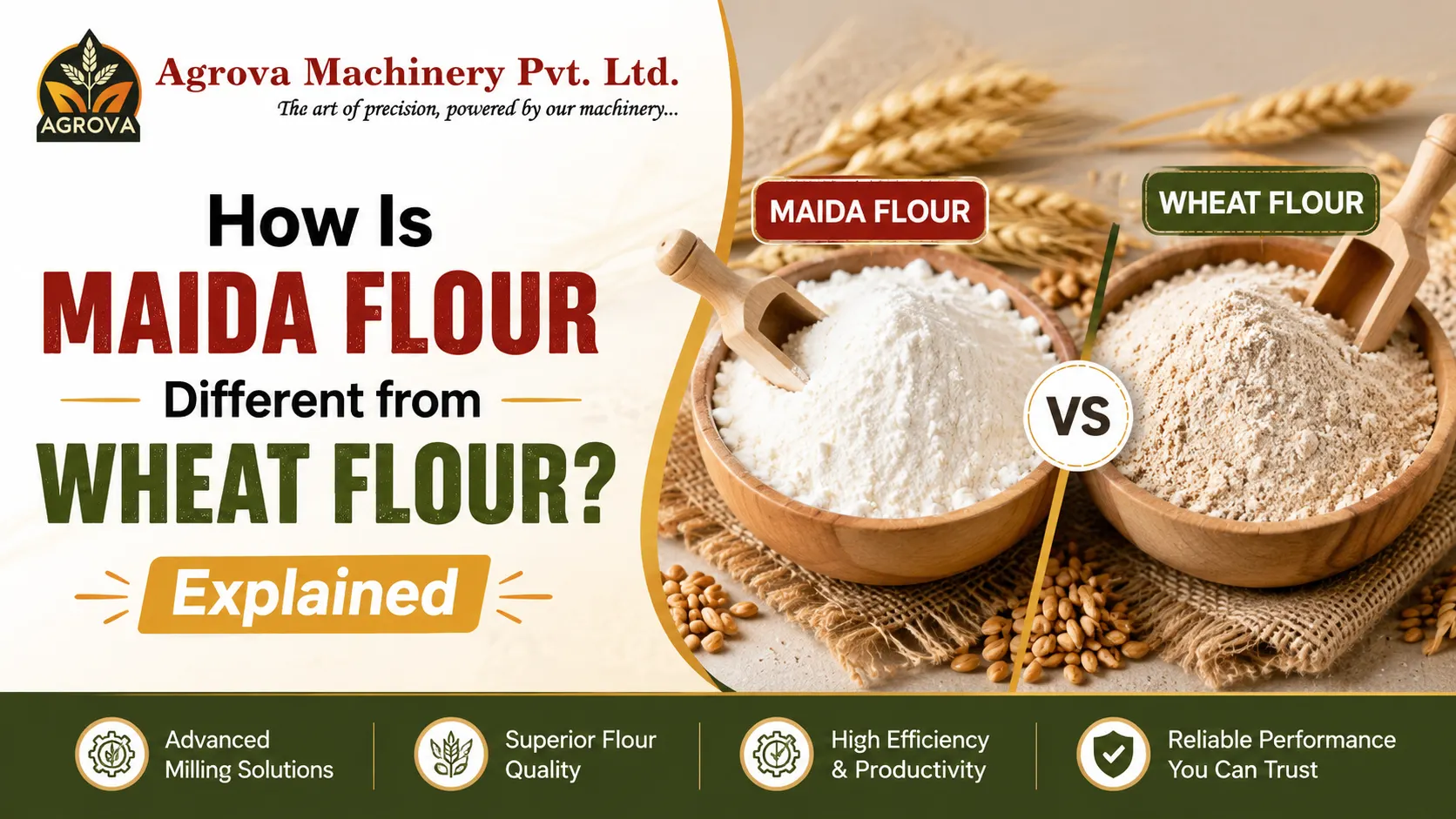
Flour is one of the most important ingredients in households and food processing industries worldwide. Among the various types of flour available, maida flour and wheat flour (atta) are the most commonly used. Although both are derived from wheat grains, they differ significantly in terms of processing, nutritional value, texture, and applications. Understanding these differences can help consumers and food manufacturers make informed choices based on their specific needs.
What is Maida, made from which grain?
Maida, also known as refined wheat flour, is produced by removing the bran and germ layers of wheat grains and milling only the endosperm. The result is a fine, white flour with a smooth texture that is widely used in bakery products, snacks, and processed foods.
Due to its refined nature, maida offers excellent baking properties and creates soft, fluffy, and light-textured products. It is commonly used in bread, cakes, pastries, biscuits, noodles, pizza bases, and other bakery items.
Wheat Flour is Maida or Atta
Wheat flour, commonly known as atta, is made by grinding whole wheat grains, including the bran, germ, and endosperm. Since all parts of the grain are retained, wheat flour contains more fiber, vitamins, minerals, and natural nutrients compared to maida.
Atta is primarily used for making chapatis, rotis, parathas, and various traditional food products. It is considered a healthier option due to its higher nutritional content.
Difference Between Atta and Maida
1. Processing Method
Maida Flour
- Highly refined and processed
- Bran and germ are removed
- Only the endosperm is milled
Wheat Flour
- Made from whole wheat grains
- Contains bran, germ, and endosperm
- Minimal processing
2. Color and Texture
Maida Flour
- Pure white in color
- Extremely fine and smooth texture
- Produces soft and fluffy products
Wheat Flour
- Light brown or cream-colored
- Slightly coarse texture
- Produces denser and more nutritious products
3. Nutritional Value
Atta contains more dietary fiber, vitamins, minerals, and antioxidants because it retains all parts of the grain. Maida loses a significant portion of these nutrients during the refining process.
4. Digestibility
Whole wheat flour supports better digestion due to its fiber content. Maida contains less fiber and may digest more quickly, leading to rapid spikes in blood sugar levels.
5. Applications
Maida Flour Uses
- Bread manufacturing
- Cakes and pastries
- Biscuits and cookies
- Pizza and burger buns
- Noodles and pasta
Wheat Flour Uses
- Chapatis and rotis
- Parathas
- Traditional bakery products
- Healthy food products
- Multigrain flour blends
Importance of Quality Flour Processing
The quality of both maida and wheat flour depends heavily on the milling process and machinery used. Advanced flour milling equipment ensures efficient grain cleaning, grinding, and separation, resulting in superior flour quality and consistency.
Agrova Machinery is a trusted name in the flour processing industry, offering advanced flour mill solutions designed for efficient wheat cleaning, grinding, and flour production. The company’s modern milling equipment helps manufacturers achieve high productivity, better flour quality, and reliable performance for commercial flour processing operations.
Which Flour Should You Choose?
The choice between maida and wheat flour depends on the intended application. For bakery products that require a soft and fluffy texture, maida is often preferred. For everyday consumption and higher nutritional value, wheat flour remains the better option.
Many food manufacturers use both types of flour depending on product requirements, ensuring the desired balance between texture, taste, and nutritional content.
Conclusion
Maida flour and wheat flour both originate from the same wheat grain, they differ significantly in processing, nutritional value, texture, and uses. Wheat flour retains the natural goodness of the entire grain, making it a healthier choice for daily consumption. Maida flour, on the other hand, offers superior baking characteristics and is widely used in commercial food production.
With advanced flour mill machinery from Agrova Machinery, flour manufacturers can efficiently produce high-quality maida and wheat flour that meet industry standards and consumer expectations.