
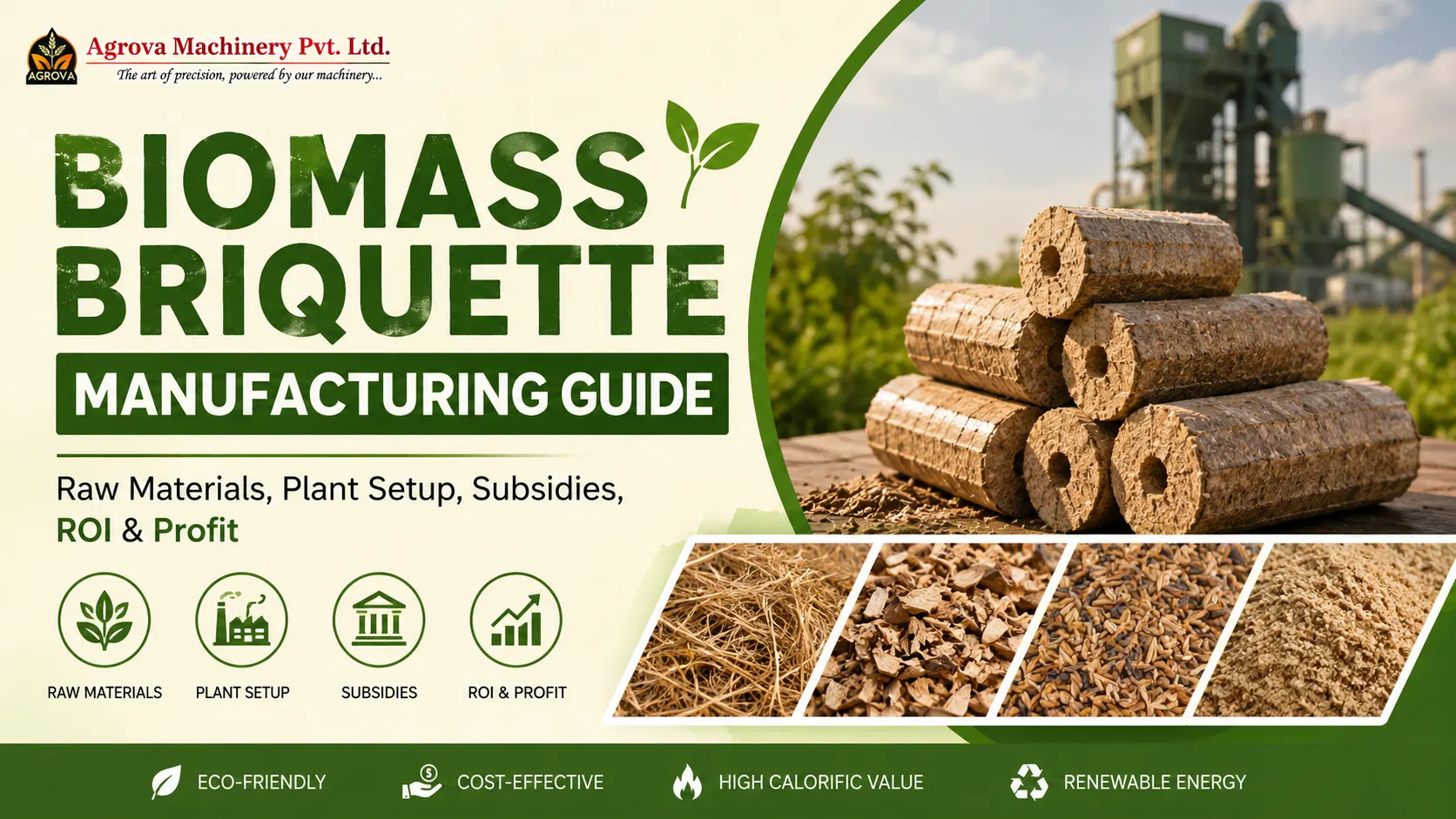
As industries increasingly shift toward renewable and sustainable energy sources, biomass briquettes have emerged as an effective alternative to traditional fossil fuels. Biomass briquettes are compact blocks of combustible organic materials that provide a clean, cost-effective, and eco-friendly fuel solution for industrial boilers, furnaces, power plants, and other heating applications.
This guide explores the raw materials, plant setup requirements, subsidies, return on investment (ROI), and profit potential of a biomass briquette manufacturing business.
What Are Biomass Briquettes?
Biomass briquettes are solid fuel blocks made by compressing agricultural residues, forestry waste, and other organic biomass materials under high pressure. These briquettes serve as a substitute for coal, firewood, and furnace oil in various industrial applications.
The manufacturing process involves drying, grinding, and compressing biomass waste into dense cylindrical or square-shaped briquettes without the use of harmful chemicals.
Common Raw Materials for Biomass Briquettes
One of the major advantages of biomass briquette production is the availability of raw materials. Various agricultural and forestry residues can be utilized, including:
- Rice husk
- Mustard stalk
- Cotton stalk
- Groundnut shells
- Sugarcane bagasse
- Sawdust
- Wood chips
- Coconut shells
- Wheat straw
- Maize stalk
- Bamboo waste
- Forestry residues
The ideal moisture content of raw material should generally be between 8% and 12% for efficient briquette production.
Biomass Briquette Manufacturing Process
The production process consists of several stages:
1. Raw Material Collection
Agricultural and forestry waste is collected and transported to the production facility.
2. Drying
Raw materials are dried to achieve the required moisture level for briquetting.
3. Size Reduction
The biomass is processed through a crusher or grinder to obtain uniform particle size.
4. Briquetting
The prepared biomass is compressed using a briquette machine under high pressure to form dense fuel briquettes.
5. Cooling and Storage
Finished briquettes are cooled, packed, and stored for transportation and sale.
Machinery Required for Biomass Briquette Manufacturing
A complete biomass briquette manufacturing setup generally includes:
- Biomass Crusher
- Hammer Mill
- Rotary Dryer
- Screw Conveyor
- Briquetting Machine
- Cooling System
- Storage Equipment
- Electrical Control Panel
- Material Handling Equipment
Agrova Machinery provides advanced biomass briquette manufacturing equipment designed for efficient production, energy savings, and long-term reliability.
Biomass Briquette Plant Setup Requirements
Land Requirement
A small to medium-scale briquette plant may require:
- 5,000 to 20,000 square feet of land
- Raw material storage area
- Production section
- Finished goods storage
- Utility area
Power Requirement
Power requirements vary according to plant capacity and machinery selection.
Manpower
A typical briquette manufacturing unit requires:
- Machine operators
- Skilled technicians
- Supervisors
- Loading and unloading staff
Government Subsidies and Support
Many state and central government programs encourage biomass-based renewable energy projects. Entrepreneurs may benefit from:
- Renewable energy promotion schemes
- MSME support programs
- Financial assistance for machinery
- Interest subsidies on loans
- Technology upgradation support
- State-specific renewable energy incentives
Since subsidy programs vary by state and are periodically updated, investors should consult the latest guidelines from relevant government departments before planning a project.
Advantages of Biomass Briquettes
- Environment Friendly: Biomass briquettes help reduce dependence on fossil fuels and lower greenhouse gas emissions.
- Waste Utilization: Agricultural waste that would otherwise be burned or discarded can be converted into valuable fuel.
- Cost-Effective Fuel: Industries can reduce fuel costs by switching from coal or furnace oil to biomass briquettes.
- High Calorific Value: Briquettes offer consistent combustion and efficient heat generation.
- Easy Handling and Storage: Their compact shape makes transportation and storage more convenient than loose biomass.
ROI and Profitability
Biomass briquette manufacturing is considered a promising business due to growing industrial demand for renewable fuel.
Profitability depends on factors such as:
- Availability and cost of raw materials
- Plant production capacity
- Fuel demand in the target market
- Transportation costs
- Operational efficiency
- Government incentives
Businesses located near agricultural regions often benefit from lower raw material transportation costs, resulting in better profit margins. With proper planning, quality machinery, and efficient operations, investors can achieve attractive returns and long-term business growth.
Market Demand for Biomass Briquettes
Demand for biomass briquettes continues to grow across sectors such as:
- Industrial boilers
- Textile industries
- Food processing plants
- Chemical industries
- Power generation units
- Brick kilns
- Paper mills
- Steel processing industries
As industries seek cleaner fuel alternatives and governments promote sustainable energy practices, the biomass fuel market is expected to expand significantly in the coming years.
Why Choose Agrova Machinery?
Agrova Machinery is a trusted manufacturer of biomass pellet machinery and complete briquetting plant solutions. The company offers advanced equipment designed to maximize productivity, reduce operating costs, and ensure consistent briquette quality.
With a focus on innovation, quality, and customer satisfaction, we provide reliable biomass processing systems tailored to diverse production requirements. From plant planning and machinery selection to installation and technical support, Agrova Machinery helps businesses establish efficient and profitable biomass briquette manufacturing operations.
Conclusion
Biomass briquette manufacturing presents an excellent opportunity for entrepreneurs looking to enter the renewable energy sector. With abundant raw material availability, increasing industrial demand, government support, and strong environmental benefits, briquette production can become a sustainable and profitable business.
By investing in quality machinery from Agrova Machinery and implementing efficient production practices, businesses can capitalize on the growing demand for eco-friendly fuel while contributing to a cleaner and more sustainable future.